 Comprehensive Clinical Nephrology (6th Edition) – eBook
  Fundamentals of Information Systems Security (3rd Edition) – eBook
  Abnormal Psychology: An Integrative Approach 8th Edition David H. Barlow, ISBN-13: 978-1305950443
  The Elements of Statistical Learning: Data Mining, Inference, and Prediction 2nd Edition, ISBN-13: 978-0387848570
  Wyllie’s Treatment of Epilepsy: Principles and Practice 6th Edition, ISBN-13: 978-1451191523
 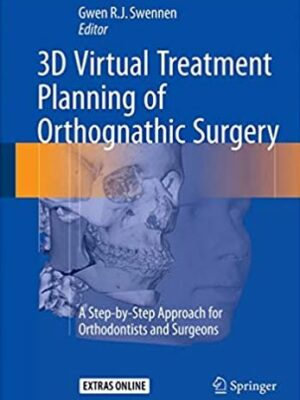 3D Virtual Treatment Planning of Orthognathic Surgery Gwen Swennen, ISBN-13: 978-3662473887
 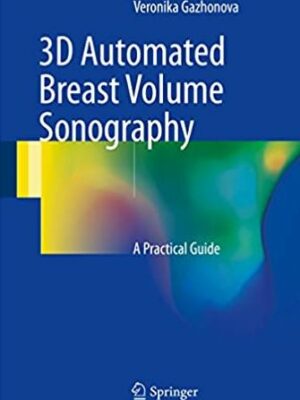 3D Automated Breast Volume Sonography: A Practical Guide, ISBN-13: 978-3319419701
  Tort Law: Principles in Practice 3rd Edition by James Underwood, ISBN-13: 978-1543838817
  The Vocabulary and Concepts of Organic Chemistry 2nd Edition Milton Orchin, ISBN-13: 978-0471680284
  Workbook for Diagnostic Medical Sonography: The Vascular System 2nd Edition, ISBN-13: 978-1496385635
  Abnormal Psychology 9th Edition Thomas Oltmanns, ISBN-13: 978-0134899053
  The Beauty of Chemistry: Art, Wonder, and Science Philip Ball, ISBN-13: 978-0262044417
  COMPACT Literature: Reading, Reacting, Writing (9th Edition) 2016 MLA Update eTextbook
  Abnormal Psychology: A Scientist-Practitioner Approach 4th Edition Deborah C. Beidel, ISBN-13: 978-0134238883
  James Stewart’s Calculus: Early Transcendentals (8th edition) – eTextBook
  Biological Psychology (13th Edition) – eBook
  Leadership: Theory and Practice (7th Edition) – eBook
  Nutrition: An Applied Approach (5th Edition) – eBook
  Hormones, Brain and Behavior (3rd Edition) – eBook
  A Compendium of Neuropsychological Tests 3rd Edition, ISBN-13: 978-0195159578
  Pharmacotherapeutics for Advanced Practice Nurse Prescribers (4th Edition)
  Security Strategies in Windows Platforms and Applications 3rd Edition by Michael G. Solomon, ISBN-13: 978-1284175622
  The Five Dysfunctions of a Team: A Leadership Fable Patrick Lencioni, ISBN-13: 978-0787960759
  Professional Development of Chemistry Teachers: Theory and Practice, ISBN-13: 978-1782627067
  The Human Services Internship: Getting the Most from Your Experience 4th Edition, ISBN-13: 978-1305087347
  Understanding Analysis 2nd Edition by Stephen Abbott, ISBN-13: 978-1493927111
  101 Trauma-Informed Interventions Linda Curran, ISBN-13: 978-1936128426
  The New Regulatory Framework for Consumer Dispute Resolution, ISBN-13: 978-0198766353
  Understanding Business (12th edition) – PDF – eTextBook
  Adult Development and Aging (8th Edition) – eBook
  Guyton and Hall Textbook of Medical Physiology (13th Edition) – eBook
  Myers’ Psychology (12th Edition) – eBook
  Brock Biology of Microorganisms 15th edition (global) – eTextBook
  The Ultimate Job Hunter’s Guidebook 7th Edition Susan Greene, ISBN-13: 978-1285868103
  Statistical Models: Theory and Practice 2nd Edition by David A. Freedman, ISBN-13: 978-0521743853
  Understanding Engineering Mathematics by Bill Cox, ISBN-13: 978-0750650984
  Topology 2nd Edition by James Munkres, ISBN-13: 978-0131816299
Description
Fundamentals of Modern Statistical Methods 2nd Edition by Rand R. Wilcox, ISBN-13: 978-1441955241
[PDF eBook eTextbook]
- Publisher: Springer; 2nd ed. 2010 edition (March 18, 2010)
- Language: English
- 265 pages
- ISBN-10: 1441955240
- ISBN-13: 978-1441955241
Conventional statistical methods have a very serious flaw. They routinely miss differences among groups or associations among variables that are detected by more modern techniques, even under very small departures from normality. Hundreds of journal articles have described the reasons standard techniques can be unsatisfactory, but simple, intuitive explanations are generally unavailable. Situations arise where even highly nonsignificant results become significant when analyzed with more modern methods.
Without assuming the reader has any prior training in statistics, Part I of this book describes basic statistical principles from a point of view that makes their shortcomings intuitive and easy to understand. The emphasis is on verbal and graphical descriptions of concepts. Part II describes modern methods that address the problems covered in Part I. Using data from actual studies, many examples are included to illustrate the practical problems with conventional procedures and how more modern methods can make a substantial difference in the conclusions reached in many areas of statistical research.
The second edition of this book includes a number of advances and insights that have occurred since the first edition appeared. Included are new results relevant to medians, regression, measures of association, strategies for comparing dependent groups, methods for dealing with heteroscedasticity, and measures of effect size.
Table of Contents:
Introduction
1(10)
A Brief History of the Normal Curve
2(3)
Empirical Studies Regarding Normality
5(1)
Inferential Methods
6(5)
Getting Started
11(18)
Probability Curves
11(1)
The Mean
12(4)
The Median
16(2)
A Weighted Mean
18(1)
Variance
19(1)
Measuring Error
20(2)
Fitting a Straight Line to Data
22(5)
Two Views of the Computations
25(2)
A Summary of Key Points
27(2)
The Normal Curve And Outlier Detection
29(18)
The Normal Curve
29(3)
Detecting Outliers
32(2)
The Boxplot
34(1)
The Central Limit Theorem
35(9)
Normality and the Median
40(4)
Three Points Worth Stressing
44(1)
A Summary of Key Points
45(2)
Accuracy And Inference
47(16)
Some Optimal Properties of the Mean
47(2)
The Median Versus the Mean
49(3)
Regression
52(3)
Confidence Intervals
55(2)
Confidence Intervals for the Population Mean
57(1)
Confidence Interval for the Slope
58(4)
A Summary of Key Points
62(1)
Hypothesis Testing And Small Sample Sizes
63(24)
Hypothesis Testing
63(5)
The One-Sample T Test
68(4)
Some Practical Problems With Student’s T
72(5)
The Two-Sample Case
77(2)
The Good News About Student’s T
79(1)
The Bad News About Student’s T
79(2)
What Does Rejecting With Student’s T Tell Us?
81(2)
Comparing Multiple Groups
83(1)
Comparing Medians
83(1)
A Summary of Key Points
84(1)
Bibliographic Notes
85(2)
The Bootstrap
87(22)
Two Bootstrap Methods for Means
88(8)
The Percentile Method
88(4)
The Bootstrap t Method
92(4)
Testing Hypotheses
96(2)
Why Does the Bootstrap t Perform Well Compared to Student’s T?
96(2)
Comparing Two Independent Groups
98(1)
Hypothesis Testing
98(1)
Comparing Medians
99(1)
Regression
99(4)
A Modified Percentile Bootstrap Method
100(2)
The Wild Bootstrap
102(1)
Correlation And Tests of Independence
103(4)
A Summary of Key Points
107(1)
Bibliographic Notes
108(1)
A Fundamental Problem
109(20)
Power
112(2)
Another Look at Accuracy
114(1)
The Graphical Interpretation of Variance
115(1)
Outlier Detection
115(2)
Measuring Effect Size
117(3)
How Extreme Can the Mean Be?
120(1)
Regression
120(3)
Pearson’s Correlation
123(2)
More About Outlier Detection
125(1)
A Summary of Key Points
125(1)
Bibliographic Notes
126(3)
Robust Measures of Location
129(18)
The Trimmed Mean
131(7)
The Population Trimmed Mean
136(2)
M-Estimators
138(3)
Computing a One-Step M-Estimator of Location
141(3)
A Summary of Key Points
144(1)
Bibliographic Notes
145(2)
Inferences About Robust Measures of Location
147(22)
Estimating the Variance of the Trimmed Mean
147(6)
Inferences About the Population Trimmed Mean
153(3)
The Relative Merits of Using a Trimmed Mean Versus Mean
156(1)
The Two-Sample Case
157(2)
Power Using Trimmed Means Versus Means
159(1)
Inferences Based On M-Estimators
160(1)
The Two-Sample Case Using an M-Estimator
161(1)
Comparing Medians
161(1)
Robust Measures of Effect Size
162(1)
Some Remaining Issues
163(2)
Comparing Dependent Groups
165(1)
A Summary of Key Points
166(1)
Bibliographic Notes
167(2)
Measures of Association
169(24)
What Does Pearson’s Correlation Tell Us?
169(3)
Other Ways Pearson’s Correlation Is Used
172(3)
The Winsorized Correlation
175(3)
Spearman’s RHO
178(1)
Kendall’s Tau
179(1)
Methods Related to M-Estimators
180(1)
A Possible Problem
180(3)
Global Measures of Association
183(4)
Minimum Volume Ellipsoid Estimator
183(1)
Minimum Covariance Determinant Estimator
184(3)
Other Global Measures of Association
187(1)
Curvature
187(4)
Measuring the Strength of an Association Based on a Smoother
190(1)
A Summary of Key Points
191(1)
Bibliographic Notes
192(1)
Robust Regression
193(24)
Theil – Sen Estimator
194(3)
Regression Via Robust Correlation And Variances
197(1)
L1 Regression
198(2)
Least Trimmed Squares
200(3)
Least Trimmed Absolute Value
203(1)
Least Median of Squares
203(1)
Regression Outliers And Leverage Points
203(3)
M-Estimators
206(2)
The Deepest Regression Line
208(1)
Relative Merits And Extensions to Multiple Predictors
209(1)
Correlation Based on Robust Regression
210(1)
Robust Smoothers
210(1)
Comparing Regression Lines: Modern Improvements on Ancova
211(2)
Choosing a Regression Method
213(2)
A Summary of Key Points
215(1)
Bibliographic Notes
215(2)
Alternative Strategies And Software
217(20)
Ranked-Based Methods for Comparing Two Groups
217(6)
Empirical Likelihood
223(1)
Permutation Tests
224(2)
Plots for Comparing Two Groups
226(3)
Comparing More Than Two Groups
229(3)
Rank-Based Methods for Comparing Multiple Groups
232(1)
Regression Based on Ranked Residuals
233(1)
Software
233(2)
A Summary of Key Points
235(1)
Bibliographic Notes
236(1)
Appendix A
237(2)
References
239
Rand Wilcox is a professor of psychology at the University of Southern California. He is a fellow of the Royal Statistical Society and the Association for Psychological Science. Dr. Wilcox currently serves as an associate editor of Computational Statistics & Data Analysis, Communications in Statistics: Theory and Methods, Communications in Statistics: Simulation and Computation, and Psychometrika. He has published more than 280 articles in a wide range of statistical journals and he is the author of six other books on statistics.
What makes us different?
• Instant Download
• Always Competitive Pricing
• 100% Privacy
• FREE Sample Available
• 24-7 LIVE Customer Support



Reviews
There are no reviews yet.