 The Organic Chemistry of Drug Synthesis Volume 7 Edition Daniel Lednicer, ISBN-13: 978-0470107508
  Abnormal Psychology 16th Edition James N. Butcher, ISBN-13: 978-0205944286
  Biological Psychology (13th Edition) – eBook
  Workbook for Diagnostic Medical Sonography: The Vascular System 2nd Edition, ISBN-13: 978-1496385635
  Pharmacotherapeutics for Advanced Practice Nurse Prescribers (4th Edition)
  The Handbook of Law and Society, ISBN-13: 978-1118701461
  Abnormal Psychology 9th Edition Thomas Oltmanns, ISBN-13: 978-0134899053
  The Basic Practice of Statistics 8th Edition, ISBN-13: 978-1319042578
  Wills, Trusts, and Estates 11th Edition by Robert H. Sitkoff, ISBN-13: 978-1543824469
  Abnormal Psychology: Perspectives 6th Edition David Dozois, ISBN-13: 978-0134428871
  The Chemistry of Oils and Fats: Sources, Composition, Properties, and Uses, ISBN-13: 978-0849323737
  A How To Guide For Medical Students Michael J. Englesbe, ISBN-13: 978-3319428956
  Abnormal Psychology: An Integrative Approach 8th Edition David H. Barlow, ISBN-13: 978-1305950443
  Modern Physics 3rd Edition by Kenneth S. Krane, ISBN-13: 978-1118061145
  Psychology in Action (12th Edition) – eBook
  The Joy of Abstraction: An Exploration of Math, Category Theory, and Life by Eugenia Cheng, ISBN-13: 978-1108477222
  AACN Essentials of Progressive Care Nursing 3rd Edition, ISBN-13: 9780071822923
  Myers’ Psychology (12th Edition) – eBook
  COMPACT Literature: Reading, Reacting, Writing (9th Edition) 2016 MLA Update eTextbook
  Textbook of Palliative Medicine and Supportive Care 3rd Edition Eduardo Bruera, ISBN-13: 978-0367642037
  Roald Hoffmann on the Philosophy, Art, and Science of Chemistry Jeffrey Kovac, ISBN-13: 978-0199755905
 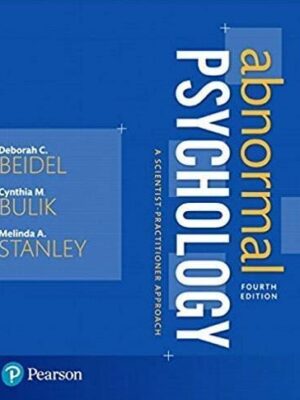 Abnormal Psychology: A Scientist-Practitioner Approach 4th Edition Deborah C. Beidel, ISBN-13: 978-0134238883
  The Chemistry of Anilines Part 1 and 2 Patai First Edition Zvi Rappoport, ISBN-13: 978-0470871713
  Managerial Accounting (16th Edition) – eBook
  A History of Palliative Care, 1500-1970: Concepts, Practices, and Ethical challenges, ISBN-13: 978-3319541778
  Guyton and Hall Textbook of Medical Physiology (13th Edition) – eBook
  Essentials of Cultural Anthropology: A Toolkit for a Global Age (2nd Edition) – eBook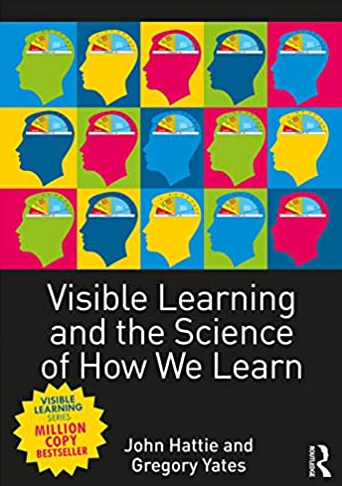
Description
Visible Learning and the Science of How We Learn by John Hattie, ISBN-13: 978-0415704991
[PDF eBook eTextbook]
- Publisher: Routledge; 1st edition (October 4, 2013)
- Language: English
- 368 pages
- ISBN-10: 0415704995
- ISBN-13: 978-0415704991
On publication in 2009 John Hattie’s Visible Learning presented the biggest ever collection of research into what actually work in schools to improve children’s learning. Not what was fashionable, not what political and educational vested interests wanted to champion, but what actually produced the best results in terms of improving learning and educational outcomes. It became an instant bestseller and was described by the TES as revealing education’s ‘holy grail’.
Now in this latest book, John Hattie has joined forces with cognitive psychologist Greg Yates to build on the original data and legacy of the Visible Learning project, showing how it’s underlying ideas and the cutting edge of cognitive science can form a powerful and complimentary framework for shaping learning in the classroom and beyond.
Visible Learning and the Science of How We Learn explains the major principles and strategies of learning, outlining why it can be so hard sometimes, and yet easy on other occasions. Aimed at teachers and students, it is written in an accessible and engaging style and can be read cover to cover, or used on a chapter-by-chapter basis for essay writing or staff development.
The book is structured in three parts – ‘learning within classrooms’, ‘learning foundations’, which explains the cognitive building blocks of knowledge acquisition and ‘know thyself’ which explores, confidence and self-knowledge. It also features extensive interactive appendices containing study guide questions to encourage critical thinking, annotated bibliographic entries with recommendations for further reading, links to relevant websites and YouTube clips. Throughout, the authors draw upon the latest international research into how the learning process works and how to maximise impact on students, covering such topics as:
-
- teacher personality;
-
- expertise and teacher-student relationships;
-
- how knowledge is stored and the impact of cognitive load;
-
- thinking fast and thinking slow;
-
- the psychology of self-control;
-
- the role of conversation at school and at home;
-
- invisible gorillas and the IKEA effect;
-
- digital native theory;
- myths and fallacies about how people learn.
This fascinating book is aimed at any student, teacher or parent requiring an up-to-date commentary on how research into human learning processes can inform our teaching and what goes on in our schools. It takes a broad sweep through findings stemming mainly from social and cognitive psychology and presents them in a useable format for students and teachers at all levels, from preschool to tertiary training institutes.
Table of Contents:
1. Why don’t students like learning at school? The Willingham thesis; 2. Is knowledge an obstacle to teaching?; 3. The teacher-student relationship; 4. Your personality as teacher: Can your students trust you?; 5. Time as a global indicator of classroom learning; 6. The recitation and the nature of classroom learning; 7. Teaching for automaticity in basic academic skill; 8. The role of feedback; 9. Acquiring complex skills though social modelling and explicit teaching; 10. Just what does expertise look like?; 11. Just how does expertise develop?; 12. Expertise in the domain of classroom teaching; 13: How knowledge is acquired; 14. How knowledge is stored in the mind;l 15. Does learning need to be conscious? What is the hidden role of gesture?; 16. The impact of cognitive loa; 17. Your memory and how it develops; 18. Mnemonics as sport, art, and instructional tools; 19. Analysing your students’ style of learning; 20. Multitasking: A widely held fallacy; 21. Your students are digital natives. Or are they?; 22. Is the Internet turning us into shallow thinkers?; 23. How does music affect learning?; 24. Confidence and its three hidden levels; 25. Self-enhancement and the dumb-and-dumber effect; 26. Achieving self-control; 27. Neuroscience of the smile: A fundamental tool in teaching; 28. The surprising advantages of being a social chameleon; 29. Invisible gorillas, inattentional blindness, and paying attention; 30. Thinking fast and thinking slow – your debt to the inner robot; 31. IKEA, effort, and valuing
What makes us different?
• Instant Download
• Always Competitive Pricing
• 100% Privacy
• FREE Sample Available
• 24-7 LIVE Customer Support


Reviews
There are no reviews yet.