 Nutrition: An Applied Approach (5th Edition) – eBook
  The Practice of Adaptive Leadership Ronald Heifetz, ISBN-13: 978-1422105764
  The Human Services Internship: Getting the Most from Your Experience 4th Edition, ISBN-13: 978-1305087347
  Essentials of Cultural Anthropology: A Toolkit for a Global Age (2nd Edition) – eBook
  The Practice of Professional Consulting 1st Edition, ISBN-13: 978-1118241844
  The Black Swan: The Impact of the Highly Improbable, ISBN-13: 978-1400063512
  The Handbook of Law and Society, ISBN-13: 978-1118701461
  Student Study Guide and Solutions Manual for Organic Chemistry 2nd Edition, ISBN-13: 978-1118647950
  The Equation of Knowledge: From Bayes’ Rule to a Unified Philosophy of Science, ISBN-13: 978-0367428150
  Understanding Management 10th Edition Richard L. Daft, ISBN-13: 978-1305502215
  Brock Biology of Microorganisms 15th edition (global) – eTextBook
 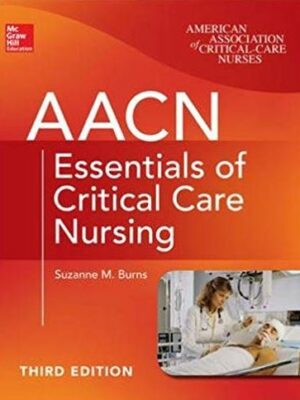 AACN Essentials of Critical Care Nursing 3rd Edition, ISBN-13: 9780071822794
  3D Virtual Treatment Planning of Orthognathic Surgery Gwen Swennen, ISBN-13: 978-3662473887
  Wintrobe’s Atlas of Clinical Hematology 2nd Edition Babette Weksler, ISBN-13: 978-1605476148
  Trigonometry 11th Edition by Margaret L. Lial, ISBN-13: 978-0134217437
  Abnormal Psychology: A Scientist-Practitioner Approach 4th Edition Deborah C. Beidel, ISBN-13: 978-0134238883
  Understanding and Mastering The Bluebook: A Guide for Students and Practitioners 4th Edition, ISBN-13: 978-1531019150
 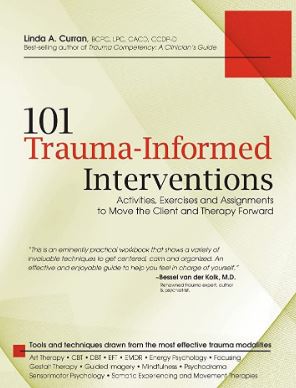 101 Trauma-Informed Interventions Linda Curran, ISBN-13: 978-1936128426
  Sulfuric Acid Manufacture: Analysis, Control and Optimization 2nd Edition Matt King, ISBN-13: 978-0080982205
  James Stewart’s Calculus: Early Transcendentals (8th edition) – eTextBook
  Strength in Numbers: The Rising of Academic Statistics Departments in the U. S., ISBN-13: 978-1461436485
  Abnormal Psychology 9th Edition Thomas Oltmanns, ISBN-13: 978-0134899053
  The 100 Most Important Chemical Compounds Richard L. Myers, ISBN-13: 978-0313337581
  Encyclopedia of Information Science and Technology, 4th Edition (10 Volumes)
  Using Econometrics: A Practical Guide 7th Edition, ISBN-13: 978-0134182742
  The Basic Practice of Statistics 8th Edition, ISBN-13: 978-1319042578
  Comprehensive Clinical Nephrology (6th Edition) – eBook
  Introductory Econometrics: A Modern Approach 6th Edition, ISBN-13: 978-1305270107
  Transportation: A Global Supply Chain Perspective 9th Edition, ISBN-13: 978-1337406642
  Statistical Models: Theory and Practice 2nd Edition by David A. Freedman, ISBN-13: 978-0521743853
  Roald Hoffmann on the Philosophy, Art, and Science of Chemistry Jeffrey Kovac, ISBN-13: 978-0199755905
 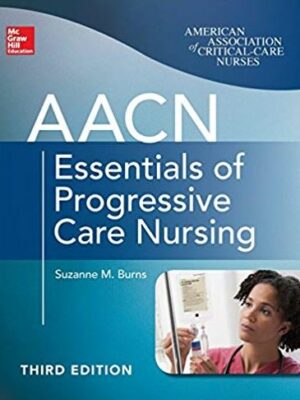 AACN Essentials of Progressive Care Nursing 3rd Edition, ISBN-13: 9780071822923
  The Limits of Hobbesian Contractarianism, ISBN-13: 978-0521420624
  Fundamentals of Information Systems Security (3rd Edition) – eBook
  The Complexity of Boolean Functions by Ingo Wegener, ISBN-13: 978-0471915553
  Pharmacotherapeutics for Advanced Practice Nurse Prescribers (4th Edition)
  Interplay: The Process of Interpersonal Communication (14th Edition) – eBook PDF
  Theory of Constraints Handbook James F Cox III, ISBN-13: 978-0071665544
  Culture Counts: A Concise Introduction to Cultural Anthropology (4th Edition) – eBook
  Leadership: Theory and Practice (7th Edition) – eBook
  A How To Guide For Medical Students Michael J. Englesbe, ISBN-13: 978-3319428956
  Project Management: The Managerial Process (7th Edition) – eBook
  Myers’ Psychology (12th Edition) – eBook
  Psychology in Action (12th Edition) – eBook
  Managerial Accounting (16th Edition) – eBook
  Abnormal Psychology: Perspectives 6th Edition David Dozois, ISBN-13: 978-0134428871
  You’re Wrong, I’m Right: Dueling Authors Reexamine Classic Teachings in Anesthesia, ISBN-13: 978-3319431673
  Product and Process Design Principles: Synthesis, Analysis and Evaluation 4th Edition, ISBN-13: 978-1119282631
  Hormones, Brain and Behavior (3rd Edition) – eBook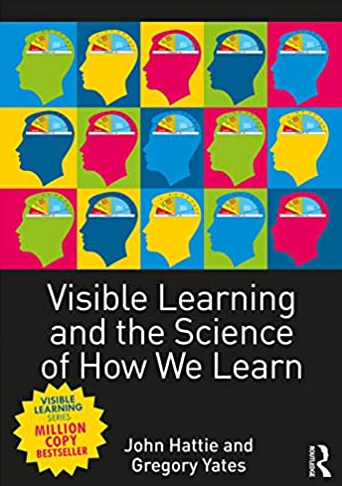
Description
Visible Learning and the Science of How We Learn by John Hattie, ISBN-13: 978-0415704991
[PDF eBook eTextbook]
- Publisher: Routledge; 1st edition (October 4, 2013)
- Language: English
- 368 pages
- ISBN-10: 0415704995
- ISBN-13: 978-0415704991
On publication in 2009 John Hattie’s Visible Learning presented the biggest ever collection of research into what actually work in schools to improve children’s learning. Not what was fashionable, not what political and educational vested interests wanted to champion, but what actually produced the best results in terms of improving learning and educational outcomes. It became an instant bestseller and was described by the TES as revealing education’s ‘holy grail’.
Now in this latest book, John Hattie has joined forces with cognitive psychologist Greg Yates to build on the original data and legacy of the Visible Learning project, showing how it’s underlying ideas and the cutting edge of cognitive science can form a powerful and complimentary framework for shaping learning in the classroom and beyond.
Visible Learning and the Science of How We Learn explains the major principles and strategies of learning, outlining why it can be so hard sometimes, and yet easy on other occasions. Aimed at teachers and students, it is written in an accessible and engaging style and can be read cover to cover, or used on a chapter-by-chapter basis for essay writing or staff development.
The book is structured in three parts – ‘learning within classrooms’, ‘learning foundations’, which explains the cognitive building blocks of knowledge acquisition and ‘know thyself’ which explores, confidence and self-knowledge. It also features extensive interactive appendices containing study guide questions to encourage critical thinking, annotated bibliographic entries with recommendations for further reading, links to relevant websites and YouTube clips. Throughout, the authors draw upon the latest international research into how the learning process works and how to maximise impact on students, covering such topics as:
-
- teacher personality;
-
- expertise and teacher-student relationships;
-
- how knowledge is stored and the impact of cognitive load;
-
- thinking fast and thinking slow;
-
- the psychology of self-control;
-
- the role of conversation at school and at home;
-
- invisible gorillas and the IKEA effect;
-
- digital native theory;
- myths and fallacies about how people learn.
This fascinating book is aimed at any student, teacher or parent requiring an up-to-date commentary on how research into human learning processes can inform our teaching and what goes on in our schools. It takes a broad sweep through findings stemming mainly from social and cognitive psychology and presents them in a useable format for students and teachers at all levels, from preschool to tertiary training institutes.
Table of Contents:
1. Why don’t students like learning at school? The Willingham thesis; 2. Is knowledge an obstacle to teaching?; 3. The teacher-student relationship; 4. Your personality as teacher: Can your students trust you?; 5. Time as a global indicator of classroom learning; 6. The recitation and the nature of classroom learning; 7. Teaching for automaticity in basic academic skill; 8. The role of feedback; 9. Acquiring complex skills though social modelling and explicit teaching; 10. Just what does expertise look like?; 11. Just how does expertise develop?; 12. Expertise in the domain of classroom teaching; 13: How knowledge is acquired; 14. How knowledge is stored in the mind;l 15. Does learning need to be conscious? What is the hidden role of gesture?; 16. The impact of cognitive loa; 17. Your memory and how it develops; 18. Mnemonics as sport, art, and instructional tools; 19. Analysing your students’ style of learning; 20. Multitasking: A widely held fallacy; 21. Your students are digital natives. Or are they?; 22. Is the Internet turning us into shallow thinkers?; 23. How does music affect learning?; 24. Confidence and its three hidden levels; 25. Self-enhancement and the dumb-and-dumber effect; 26. Achieving self-control; 27. Neuroscience of the smile: A fundamental tool in teaching; 28. The surprising advantages of being a social chameleon; 29. Invisible gorillas, inattentional blindness, and paying attention; 30. Thinking fast and thinking slow – your debt to the inner robot; 31. IKEA, effort, and valuing
What makes us different?
• Instant Download
• Always Competitive Pricing
• 100% Privacy
• FREE Sample Available
• 24-7 LIVE Customer Support


Reviews
There are no reviews yet.